
Making America Great Again? Ten Years of Trump

ACADEMIC CONFERENCE
Marking ten years since Donald Trump’s first inauguration, this comprehensive all-day conference (9.45am-3.45pm) offers an unparalleled exploration of a decade that fundamentally reshaped modern politics.
Open to all students, but designed specifically to align with A-Level US and Global Politics examination specifications, this event bridges the gap between textbook theory and real-world political history.
Whether attending to support classroom learning, for revision, to boost exam performance with high-level academic case studies, or simply interested in understanding the Trump agenda, this conference provides the ultimate deep dive into a fascinating decade.
LEEDS: £38.00 (Standard) | £22.00 (Teacher)
OXFORD: £43.00 (Standard) | £27.00 (Teacher)
Full information below. All ticket sales are bound by the Terms and Conditions of the event.
Session Topics

The Trump Elections: Campaigning and Voting Behaviour in 2016, 2020 and 2024.
President Trump has a lot to say about elections - for a start, he wants to increase federal oversight of them. It's no wonder Trump is so focused on elections, after all, he has not found winning them straightforward. Trump won through the Electoral College in 2016 while losing the popular vote to Hilary Clinton. In 2020 he contested the result, despite a lack of evidence of any wrongdoing. In the run up to the 2024 contest, he highlighted various ways in which he believed voting might be rigged to deny him a second term before winning the popular vote for the first time. From appearing a rank outsider back in 2015, Trump has continually defied the expectations of his critics and political pundits. He has transformed presidential communications, catalysed a powerful social movement, and shifted electoral coalitions. This talk will consider his three fascinating presidential races and how they have changed the way we look at US elections in the twenty-first century. It will explore how he has challenged the established norms of political campaigning, reconfigured voting behaviour, and even raised doubts among sections of the public about trust in elections and democratic institutions.

The Trump Party: The Remaking and Rebranding of the Republican Party under Donald Trump (2015-2027).
Donald Trump has dominated Republican politics for over a decade. His unique personal style, backed by the Make America Great Again (MAGA) movement, has supplanted the old establishment at the head of the Grand Old Party. He has won two controversial elections, undermined democratic institutions with the 202 result, and is now continuing to reshape the Right in his own image. How is this most populist of presidents doing this....and why do so many Republicans want to follow him? Why did so few support Nikki Haley when she challenged him in 2024? Casting across the time period from 2015-2027, this talk looks at Trump's impact on the Republican Party and its politics. It finishes by looking at the 2026 US midterm results and ponders "what next?" as the Republicans look ahead to 2028.

The Trump Court? Politics, Principles, and the US Supreme Court Today
Disloyal, unpatriotic, fools, lapdogs: just some of the words used by President Trump to describe the Justices of the Supreme Court after rulings which went against him. And yet for many Americans the Court has supported Trump’s agenda to such an extent that it would be best referred to as the Trump Court. How can these two views exist at the same time, and how can the existence of such views help us to better understand the role of the Court and the Justices who sit on it? In this talk we’ll consider the question of political influence at the Supreme Court. We’ll also explore the ways in which Trump’s three appointees to the Court have changed the law and public perceptions of the Supreme Court as an institution. We’ll ask what is (and is not) new about the Court’s work and consider whether we really should call it the Trump Court.
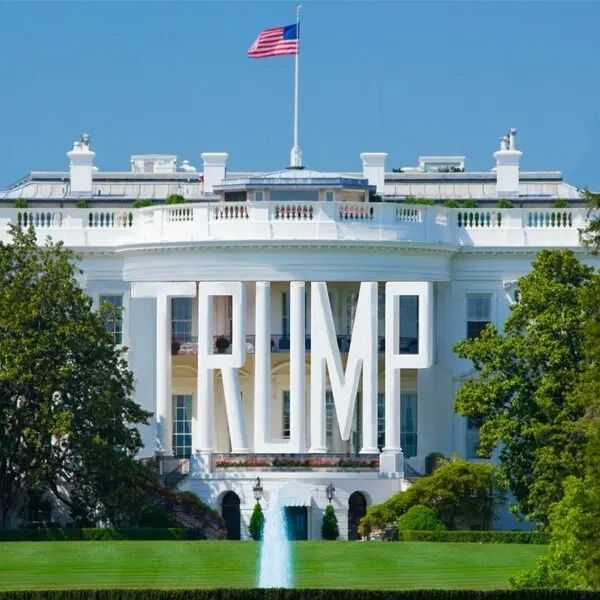
Trump, American Identity, Political Culture and Democracy.
The debate over U.S. identity has often revolved around two ideas. The first is that the United States is a country with a unified culture based on shared values and an openness to all. The second is that U.S. identity is grounded in what J.D. Vance has recently called "heritage Americans" - the first white settlers in North America, and their associated culture and values. Donald Trump's rise to prominence over the past decade has brought this debate once again to the fore. Trump has often told the story of U.S. identity in a very narrow and restrictive way, and one which suggests that the voices of a particular type of American - white, Christian, conservative - ought to hold a privileged place in U.S. democracy. Partly in reaction against him, Democrats and liberal commentators have moved substantially to the left on these questions, stressing more than ever the inclusivity which they see as at the heart of U.S. democracy. As Donald Trump's time at the top of the U.S. political scene draws to a close, what have the consequences been for American identity? And what might happen in the future?
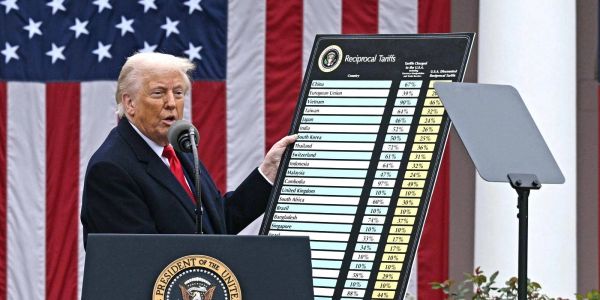
Trump and Tariffs: A Case Study of Trump and Global Politics.
Ten years after Donald Trump first upended the global economic order, his signature blend of tariff diplomacy and economic nationalism continues to dictate the terms of international trade. This session breaks away from standard economic theory to dissect a decade of protectionism, treating the Trump era as a living case study in global political disruption. We will track how weaponised duties and aggressive renegotiations forced historic allies to pivot, shattered traditional supply chains, and permanently altered the landscape of global commerce. Attendees will confront the core paradox of the "America First" doctrine: did these aggressive trade barriers successfully insulate domestic industries, or did they simply trigger a volatile era of geopolitical instability that the world is still navigating today?
Introducing Our Speakers

Dr Adam Burns
Dr Max Stafford
Dr Max Stafford
Dr Burns is Head of Politics at Brighton College and has taught US history and politics at a number of schools and universities across the UK. He is the author of American Imperialism: The Territorial Expansion of the United States, 1783–2013 (Edinburgh UP, 2017), The United States, 1865–1920: Reuniting a Nation (Routledge, 2020), and Wil
Dr Burns is Head of Politics at Brighton College and has taught US history and politics at a number of schools and universities across the UK. He is the author of American Imperialism: The Territorial Expansion of the United States, 1783–2013 (Edinburgh UP, 2017), The United States, 1865–1920: Reuniting a Nation (Routledge, 2020), and William Howard Taft and the Philippines: A Blueprint for Empire (UP Tennessee, 2020), as well as co-editing Sports and the American Presidency (Edinburgh UP, 2022) and American Imperialism in the Long Nineteenth Century: A Documentary History, 1776–1919 (Routledge, 2025). He has been interviewed about the US presidency on the podcasts 'American History Hit and America: The Story of the USA', as well as by US media outlets such as the Boston Globe and USA Today. Furthermore, he has recently contributed pieces to the US Politics and Policy blog at LSE, and an article on US imperialism at 250 for the Taylor & Francis journal Comparative American Studies.
Dr Burns will only be speaking at the Leeds event.
Dr Max Stafford
Dr Max Stafford
Dr Max Stafford
Dr Max Stafford is a former political adviser and current academic. He has worked for former cabinet ministers. His research explores the environments that political leadership happens within and how it is shaped. His 2026 book Strong Mayors' Leadership Capital explored the evolution and powers in the US, UK and Europe. His forthcoming bo
Dr Max Stafford is a former political adviser and current academic. He has worked for former cabinet ministers. His research explores the environments that political leadership happens within and how it is shaped. His 2026 book Strong Mayors' Leadership Capital explored the evolution and powers in the US, UK and Europe. His forthcoming books (for Biteback and Palgrave) explore the role and significance of the Downing Street Chief-of-Staff. Having trained political leaders in communications, operational efficiency and policy development, he is looking forward to joining the PEFS team to unpick the intricacies of the Trump presidency.
Dr Emma Long
Dr Max Stafford
Dr Andrew Gawthorpe
Dr Emma Long is Associate Professor of American History and Politics at the University of East Anglia. She is also Director of the Arthur Miller Institute for American Studies. She has published various articles and book chapters about the US Supreme Court and has written several articles on related topics for The Conversation. She is
Dr Emma Long is Associate Professor of American History and Politics at the University of East Anglia. She is also Director of the Arthur Miller Institute for American Studies. She has published various articles and book chapters about the US Supreme Court and has written several articles on related topics for The Conversation. She is currently working on a book for Edinburgh University Press, titled: The Supreme Court and American Democracy.
Dr Andrew Gawthorpe
Dr Andrew Gawthorpe
Dr Andrew Gawthorpe
Dr Andrew Gawthorpe is a specialist in U.S. politics and foreign policy at Leiden University in The Netherlands and Senior Fellow at the Foreign Policy Centre in London. At Leiden, he teaches and publishes on contemporary U.S. politics and foreign policy and leads a research group in American foreign policy and liberalism. He is also the
Dr Andrew Gawthorpe is a specialist in U.S. politics and foreign policy at Leiden University in The Netherlands and Senior Fellow at the Foreign Policy Centre in London. At Leiden, he teaches and publishes on contemporary U.S. politics and foreign policy and leads a research group in American foreign policy and liberalism. He is also the author of a forthcoming U.S. politics textbook published by Sage and CQ Press.e committed to providing personalised and engaging educational services that meet the unique needs of each student.
Andrew Threadgould
Dr Andrew Gawthorpe
Andrew Threadgould
Andrew Threadgould has spent over 30 years at the sharp end of elite education, most recently as Deputy Head at Dulwich College. Andrew is a master at translating complex market shifts into clear, compelling narratives. A prolific author of A Level Economics textbooks and a regular contributor to Economics Today, his current research at B
Andrew Threadgould has spent over 30 years at the sharp end of elite education, most recently as Deputy Head at Dulwich College. Andrew is a master at translating complex market shifts into clear, compelling narratives. A prolific author of A Level Economics textbooks and a regular contributor to Economics Today, his current research at Birkbeck explores the seismic intersections of history and money. From the Great Depression to the impact of Brexit, Andrew reveals how economic theories move from the page to the real world, shaping every aspect of our lives.
Dr William Sheward
Dr Andrew Gawthorpe
Andrew Threadgould
Dr William Sheward is an expert in US politics and political populism and has been a leading academic at the University of Winchester since 1993 and author for Jane's Sentinel, a comprehensive geopolitical and country risk assessment publication. Dr Sheward brings extensive higher education experience from teaching US policy and governanc
Dr William Sheward is an expert in US politics and political populism and has been a leading academic at the University of Winchester since 1993 and author for Jane's Sentinel, a comprehensive geopolitical and country risk assessment publication. Dr Sheward brings extensive higher education experience from teaching US policy and governance at a number of universities. He is looking forward to discussing the politics and impact of presidential elections as part of the “Making America Great Again? Ten Years of Trump” conference.
Dr Sheward will only be speaking at the Oxford event